Kenya National Archives
Walk Through Kenya’s Living History
Nairobi City Centre Walking Tour

Walk Through Kenya’s Living History
Nairobi City Centre Walking Tour
Some Stories Are Written in Books. Others Are Preserved in Memories.
Walk through the streets of Nairobi today and you see a modern African capital — busy, ambitious and constantly changing.
But beneath the traffic and skyscrapers is another Nairobi.
To discover that Kenya, step inside the Kenya National Archives and Documentation Services in the heart of Nairobi.
This is not simply a government records repository.
It is one of the places where Kenya’s memory has been preserved.
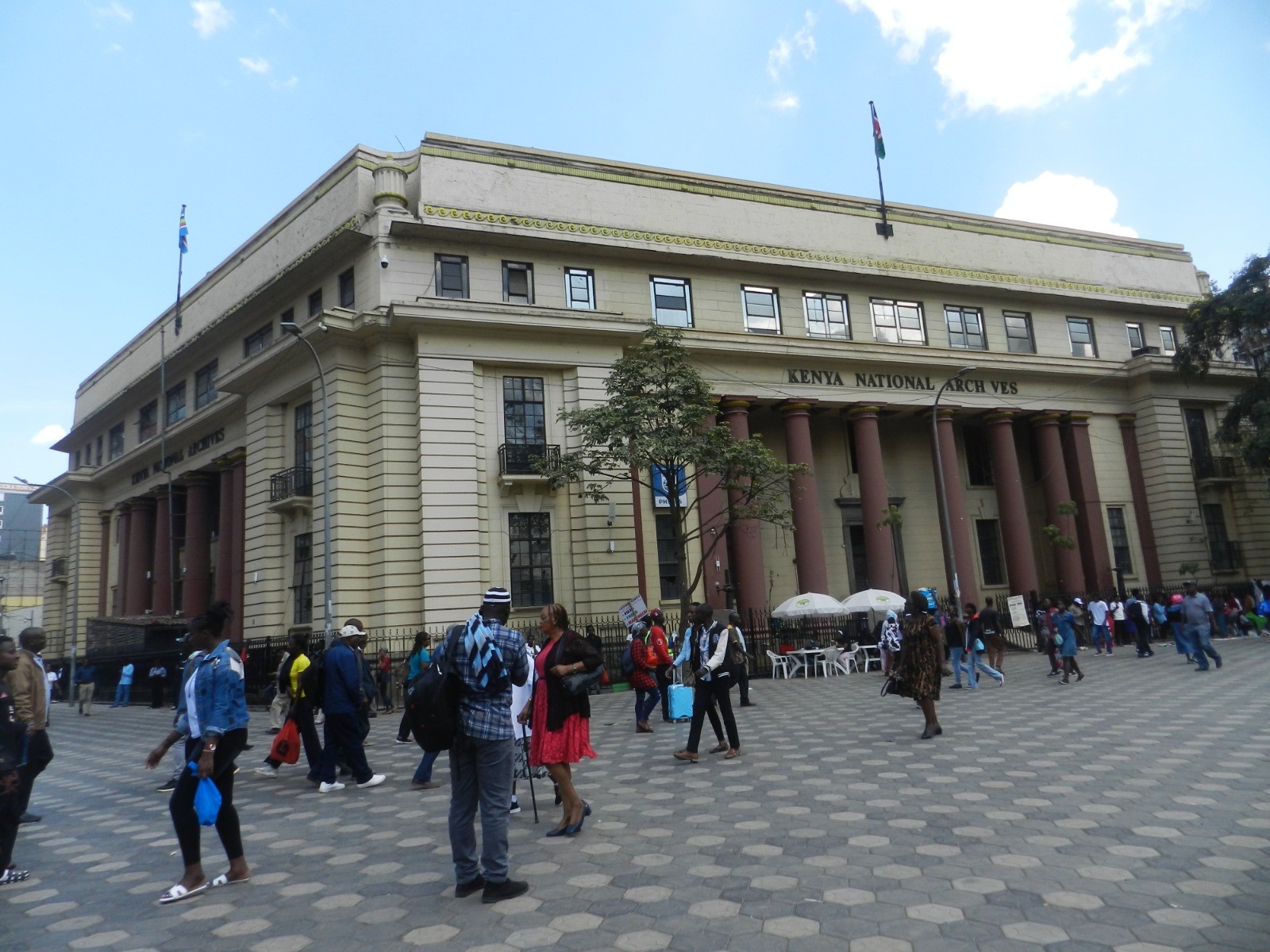
Established in 1965, shortly after Kenya gained independence, the National Archives holds an enormous collection of historical records and materials relating to Kenya and the wider East African region.
For visitors, the attraction is not necessarily about reading thousands of documents.It is about encountering the pieces of history that help explain the country you see today.Old photographs can suddenly put a face to a name.Documents can reveal another side of a familiar historical event.
Maps can show how places have changed.Objects and artworks can introduce you to cultures from across Africa.And sometimes a single photograph can tell a story that a textbook struggles to capture.
One of the great treasures associated with the National Archives is the Murumbi Collection.
The collection is connected to Joseph Zuzarte Murumbi, Kenya’s second Vice-President and one of Africa’s notable collectors of art and cultural heritage.
Murumbi and his wife, Sheila, developed an extraordinary appreciation for African art, books, textiles, jewellery and cultural objects.
Their collection eventually became part of Kenya’s national heritage.
For anyone interested in African art and culture, this is one of the most rewarding reasons to visit the National Archives.
You encounter objects not simply because they are old, but because they represent the creativity, craftsmanship and cultural identity of African societies.
Kenya's journey to independence was not simple.
It involved competing political ideas, colonial rule, resistance, imprisonment, negotiation and the determination of many Kenyans to shape their own future.
The National Archives preserves material that helps illuminate this period.
This makes the attraction particularly valuable for visitors who want to understand the Kenya beyond the safari brochure.
These are not abstract questions when you encounter the photographs and historical records connected to the people who lived through those events.
One of the most fascinating aspects of the National Archives experience is photography. Historical photographs freeze moments that would otherwise disappear.
Faces, Buildings, Ceremonies, Political gatherings, Rural life, Urban Nairobi, Leaders, Ordinary people, Some images may make you smile, Others may make you uncomfortable.And some may make you stop completely.
Because when you see an actual photograph of Kenya decades ago, you begin to realise just how dramatically the country — and Nairobi — has changed.
The National Archives is also known for its exhibition space, where visitors can encounter African art and cultural objects.
For travellers who may not have time to visit several museums and galleries around Nairobi, this provides a valuable introduction to African artistic heritage.
It is particularly interesting when combined with a wider cultural itinerary.
Rather than simply visiting one gallery after another, your guide can help connect what you see with Kenya's broader history and the diversity of its communities.
Perhaps the best way to experience the National Archives is not to visit it in isolation. Step outside and you are immediately back in modern Nairobi. But now the streets can look different. The buildings around you are no longer just buildings. They become part of the historic landscape. The monuments become more than mere statues. The old city centre begins to make sense. The railway, buildings connected to the city's development. And places such as Parliament, City Hall, City Market and KICC become chapters in a much larger story. That is why we love incorporating the National Archives into our Nairobi Historical City Tour. We don't simply take you there. We connect it to the Nairobi website.
The National Archives is particularly suitable for:
It is also an excellent stop when the weather is not ideal for outdoor sightseeing.
A fascinating Nairobi historical itinerary could begin at the Nairobi Railway Museum, where you discover how the railway helped give birth to the city.
Continue to the National Archives, where the story moves into Kenya's political, cultural and artistic history.
From there, explore Nairobi's historic streets and monuments.
Visit City Market.
See the Tom Mboya and Dedan Kimathi monuments.
Pass through the old administrative quarter.
Then finish at the Kenyatta International Convention Centre, where modern Nairobi rises above the historic city.
Suddenly, what could have been a collection of disconnected attractions becomes a story.
The story of Nairobi.
A safari shows you Kenya's wildlife. The National Archives helps you understand the country behind the wildlife. It introduces you to people, events, cultures and ideas that shaped the Kenya you are visiting today. And perhaps that is the greatest value of a heritage experience. You leave with more than photographs. You leave with context. With questions. With stories. And with a deeper appreciation of the country.
At African Affable Expedition, we believe the best city tours are not about counting how many places you can visit in one day.
They are about understanding what you are seeing. Our local guides connect the attractions, the people and the history so that Nairobi becomes more than a stopover.
Book your National Archives visit or Nairobi Historical & Cultural City Tour with African Affable Expedition.
Locally Owned. Locally Guided.
Come as a visitor. Leave with a story to tell.